Showing posts with label Hammer. Show all posts

Friday, July 2, 2010

The Legend of the 7 Golden Vampires (1974)

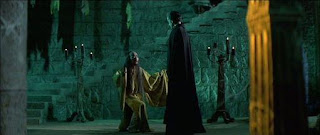
In 1804, the evil warlord Kah (Shan Chan, Intimate Confessions of a Chinese Courtesan, Five Fingers of Death tracks down Dracula's tomb and asks him to revive the 7 Golden Vampires under his command. Dracula (John Forbes Robertson) mocks his request and decides instead to kill Kah, assume his form and head to China to command the 7 Golden Vampire for himself.

I am going to use way too many pictures this time, I'm sure.

He starts like this...

...and switches to this.

One hundred years later, Professor Van Helsing arrives in China to learn about Chinese vampires. Addressing the Professors of Chongqing University, he tells a story about a small village which is under the thrall of the 7 Golden Vampires. This story is played out as almost a self-contained horror story, as a farmer discovers that his daughter has been kidnapped by Kah (presumably actually Dracula) along with a number of other young women, and charges in to save them. Both the farmer and his daughter are killed, but not before he manages to kill one of the 7 Golden Vampires, who are accompanied by a huge horde of other vampires that have risen from the grave to do Kah/Dracula's bidding. Some of these vampires can be seen to hop, following the tradition of the Chinese hopping vampire that was later used in Sammo Hung's Mr. Vampire series.

Kah/Dracula indulges himself

The dead walk

Anyway, the response of the learned audience is to say something along the lines of "You stupid European peasants might fall for such superstitious bullshit, but here in China we have a civilisation going back thousands of years, so please credit us with some intelligence," as they all walk out on him.

Later he is approached by a man who had attended the lecture, Hsi Ching (David Chiang, The Water Margin, New One-Armed Swordsman), who claims to be from the village Van Helsing had spoken of and asks for his assistance in killing the 7 Golden Vampires. Finance is put up by a rich widow, Vanessa Buren (Norwegian model Julie Ege, Up Pompeii, Rentadick) and the team set out accompanied by Hsi's sister and six brothers, all kung fu experts. Van Helsing's son Leyland tags along as well.

Julie Ege really couldn't act. I wonder why she kept getting cast in movies?

The rest of the movie basically follows this troupe as they make their way to the village, getting into kung fu fights with bandits and later with vampires, until they finally reach the cursed village and get to fight the 7 Golden Vampires. There are a couple of surprises along the way.

First of all, I expected the character of Vanessa to be a love interest for Leyland Van Helsing, and indeed at first he does seem to be courting her, but he is soon put off by her independent ways. ("They'll be wanting the vote next!") Leyland finds himself much more taken with Mai Kwen (Shih Szu), who despite being a kick-ass kung fu fighter is portrayed in non-fighting scenes as being submissive (as was typical of Western portrayals of Asian woman who weren't actively evil). So far so boringly normal.

So submissive

Much more interesting is that Vanessa turns out to be the love interest of Hsi Ching. This is very unusual indeed. Asian men are usually denied any kind of sexuality in Western movies - even today - unless it is to ridicule them. (Think of Long Dong Duk in Sixteen Candles.) To pair David Chiang with Julie Ege would have been positively revolutionary at the time. Unfortunately it doesn't quite pay off - one of these couples lives and one of them dies, and you get exactly one guess as to which is which. However the death scene is a real doozy: Vanessa has been bitten by a vampire and turned, and goes on to bite Hsi; his response, realising that he will also turn, is to impale them both together on the same stake.
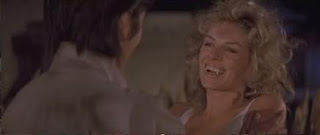
'When you think about it, it's actually a form of intercourse - but not for everyone.' - Tom Waits

Another surprise is that the kung fu fighting is actually pretty good. I knew that the movie was packed to the gills with stars of Shaw Brothers movies, as this is a co-production between Hammer and Shaw, but I expected that Roy Ward Baker's typically stodgy direction would get in the way. From what I've since read (in the book Roy Ward Baker by Geoff Mayer) Baker wanted to direct all the kung fu fighting himself, but after producer Run Run Shaw viewed the rushes from his first attempt, he insisted on bringing in Chang Cheh to handle these scenes with a second unit.
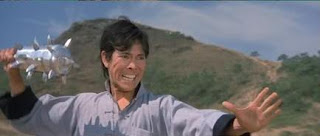
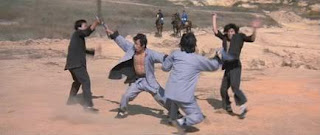
One brother

Two brothers


Seven brothers and their one sister

Chang Cheh is one of the absolute masters of martial arts cinema. For a point of reference, John Woo considers him to be his mentor. He directed such movies as The One-Armed Swordsman, Five Deadly Venoms, Golden Swallow, and (my favourite) the epic The Water Margin. Cheh used his favourite choreographer Lau Kar-Leung (who went on to direct such classics as 36 Chambers of Shaolin, 8-Diagram Pole Fighter and the Jackie Chan movie Drunken Master II) and many of his regular stars and stuntpeople. I wouldn't say that Legend of the 7 Golden Vampires represents anything like their best work, but it's respectable, and the movie never gets TOO dragged down in scenes of the Van Helsings holding their own against obviously-superior opponents.

Cheh was the director most responsible for bringing explicit bloodshed to the Chinese/Hong Kong martial arts movie, so it's good to see plenty of the red stuff being splashed around here. Shaw Brothers blood actually resembles Hammer blood quite closely, so there's a definite link in styles there, even if Cheh's fluid direction clashes somewhat with Baker's more static mise-en-scène.

David Chiang does his thing

The sexual element of vampirism is far less pronounced than in Hammer's previous Dracula movies. The reason for this is simply that Dracula himself is even more of a background figure than usual (sadly we are spared any scenes of a kung fu Dracula) and the 7 Golden Vampires all appear as desiccated corpses, with no obvious sex appeal and no apparent sex drive. However, Baker confirms his reputation as Hammer's most exploitation-minded director in several scenes of topless Chinese women being tortured by Kah/Dracula and the 7 Golden Vampires.

These two vampires just had their Twilight fan fiction slammed by Robert Pattinson.

The end of the movie is a little anticlimactic. After a huge final battle, in which all of the seven brothers and the 6 remaining Golden Vampires are all killed, Van Helsing faces off with Kah and convinces him to resume his original form as Dracula before easily staking him. The End!

Peter Cushing does his thing

John Forbes Robertson is, erm, not good as Dracula. He's wearing silly theatrical makeup (reminiscent of that worn by Howard Vernon in Jess Franco's Dracula Prisoner of Frankenstein) and is dubbed by someone else. I'm not surprised that Christopher Lee refused this one, but it's a damned shame they didn't cast someone who could fight, act, or at least look the part.
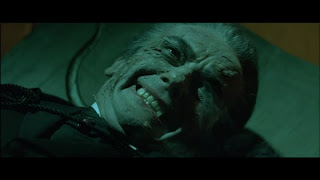
Van Helsing, you bitch! You ruined my makeup!

Cushing is fine as Van Helsing, even though the character should be dead. Hammer continuity is often poor, but this really pushes it. In Dracula AD 1972, Van Helsing is shown to die in 1872; this movie is set in 1904 and he's still moving about quite a bit. I thought that perhaps he might be Lawrence Van Helsing Jr., but reference is made in the movie to him being the one who had fought Dracula, which kills that theory.

Just to prove that Van Helsing and the Seven Brothers actually shared some screen time

(Speaking of Van Helsing descendants: if Leyland actually stays with Mai Kwen, then I guess this means that Lorimer and Jessica Van Helsing are part Chinese. Hammer never did follow Bram Stoker's line about Dracula being a corrupting foreign influence, so it's great to see them actively promoting miscegenation in this movie - even to the point of letting non-white men get with white women, which is still somewhat taboo.)

Yeah I'm going a bit crazy on the pictures today. I couldn't resist. This movie was really fun. You should watch it.

A bigger continuity problem comes from Dracula himself, who takes on the form of Kah in 1804, heads to China, and is still there in 1904. Even if we presume that none of the previous movies actually happened, there are multiple references to his previous fights with Van Helsing. Was Dracula a dual citizen throughout the 19th Century, dividing his time between China and Europe and changing his appearance constantly? I guess it's possible, but it seems more likely that scriptwriter Don Houghton (who also wrote Dracula AD 1972 and The Satanic Rites of Dracula) just didn't think about it ever hard. Or possibly didn't think about anything ever, or even comprehend the meaning of the verb "think". Amazing to think that this guy had already written some pretty decent Doctor Who stories and went on to write a good one for Sapphire & Steel. Maybe he was in the middle of a massive drug binge when he was working for Hammer. Maybe he just didn't give a damn. He died 19 years ago (to the day as it turns out - I feel a little bad talking shit about him now) so we'll probably never know.

At least we were spared another of those awful ITV soundtracks! James Bernard's score is apparently mostly pieced together from pieces of his earlier ones, and I'm still not a huge fan, but it's a vast improvement over what we had to put up in the previous two movies. As is the rest of the movie - except, of course, for Dracula.
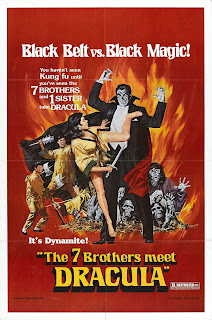
The American poster - for this version they apparently cut out 20 minutes and repeated scenes of violence & nudity to boost the running time. Apparently it ended up incomprehensible and repetitive - who would have guessed?

Here ends my Hammer Dracula marathon. Hammer would only produce one more horror movie after this, the dreadful Dennis Wheatley adaptation To the Devil... A Daughter, as well as a handful of movies based on British sitcoms and a remake of Hitchcock's The Lady Vanishes. It's a shame that they didn't get to continue putting Dracula into more modern and exotic genre movies. It would have been cool to see them get together with Toho to try and revive two dying franchises at once with Dracula vs. Godzilla.

The best image I could find of this type

Next week, a short-lived movie series that was much more successful at bringing the Count into the 1970s.

(Well, more commercially successful anyway. And it's not really Count Dracula himself, though he does make a cameo appearance at the start of the first movie. It also features much better music.)

Ladies and gentlemen, next week I bring you... Blacula!

Wednesday, June 30, 2010

The Satanic Rites of Dracula (1973)

We begin with a Satanic ceremony being performed, in which a cockerel has its throat cut so that the blood can spurt all over a naked young woman lying on an altar. Is there ever a better way to start a movie?

(Too bad I decided on a "no nudity" policy for this blog - I could have put a really good picture here otherwise.)

While this happens, a man who is tied up in another room manages to escape. He runs a gauntlet of guys in sheepskin coats on motorbikes, who are gunned down by someone in a black car. The man manages to drag himself into the car and is driven back to a secret headquarters, where British government agents quiz him about what he's witnessed. He describes the ceremony in detail (even though he didn't seem to be in the room at the time) including how the woman was stabbed, seemed to die, then revived and her wound healed in seconds. He also has five photos taken with his secret-agent-wristwatch, which show that the leaders of the cult are a top scientist, a peer of the House of Lords, a general, and the government official who actually heads the department the secret agents are working for. The fifth photo shows an empty doorway - do you think it could actually be someone who doesn't show up on film?

I couldn't find enough good photos to illustrate this post, especially with that damned 'no nudity' rule.

Unsurprisingly, they are not pleased about this. They would be even less pleased if they knew that their secretary was being chased down and kidnapped by the guys on motorbikes.

They decide that the only course of action is to call in the same bumbling Scotland Yard inspector from the previous movie, who in turn calls in Lorimer Van Helsing. It turns out that the scientist is an old friend of Van Helsing, so he goes to see him and discovers that he has created a massively beefed-up version of the bubonic plague that will destroy all human life extremely quickly if released. The next thing you know he has been knocked unconscious by a bullet to the head (huh?) and wakes to find that his friend is hanging from a noose and the Petri dishes containing the plague have gone.

The inspector and two of the agents then proceed to head to the mansion where the rituals had taken place and knock on the door, seemingly without any sort of plan or even a coherent cover story, and set about making light banter with the woman who lets them in (who just happens to be the same person who lead the rituals at the start of the movie).

Meanwhile Van Helsing's daughter Jessica (this time played by Joanna Lumley) also sneaks into the building and heads straight to the basement, where she is promptly attacked by four female vampires, one of whom is the kidnapped secretary. Her screams draw the authorities, who rush down to stake their former secretary and rescue Jessica.

Joanna Lumley in not her finest role

It turns out that the cult is lead by someone called D. D. Denham, a mysterious recluse who has never been seen and who just happened to turn up at around the time that Dracula had been staked two years earlier and whose headquarters are on the site of the demolished church. The minute that Van Helsing discovers this, he heads straight to the lion's den and demands to be shown in. For some reason Dracula attempts to disguise his identity by shining a light into Van Helsing's eyes and putting on a funny accent, and he attempts to sway the vampire hunter to his side by explaining that he wants to use the plague to overthrow the governments of the world and set up a new order.

For some reason, Van Helsing doesn't seem to think that this is a very good idea. He promptly tries to shoot the Count with a silver bullet, but is stopped by the intervention of some of the other cult leaders. Dracula has him taken to the mansion, where Jessica has been kidnapped and laid out for sacrifice.

Ta daaaa!

It turns out that the whole plot is basically a huge suicide mission for Dracula: he plans to wipe out the entire human race so that, deprived of a food source, he will finally have his eternal rest. In the meantime he wants Jessica as his consort just to fuck with Van Helsing's head. The rest of the cult are disturbed to hear that they are to be infected with the plague and used to spread it, as they thought they were just going to use it as blackmail to obtain massive power, but Dracula controls their minds and starts forcing them to infect themselves.

Fortunately (or unfortunately, depending on your viewpoint) the bumbling cop has managed to start a fire upstairs, which now spreads to this room. Van Helsing leaps out of a window, pursued by Dracula, and manages to lure him into a Hawthorn bush (supposedly what Christ's crown of thorns was made from), which messes him up enough that Van Helsing can stake him.


In my review of Dracula AD 1972, I expressed dismay that no effort was made to bring the Count effectively into the modern world, and also observed that the music made the movie seem like an episode of an ITV series. I guess I should be careful what I wish for. While this movie is energetic and fun, it's just about as far from what I want from a Dracula movie as I could imagine, with the Count reduced to the role of a corporate villain in a cheap spy movie.

The heroes are all bumbling idiots - even Van Helsing stupidly walks into a trap for no good reason - and are only saved by sheer dumb luck or (in one mind-boggling instance) because vampires can now apparently be killed by clear running water. Which means that turning on the sprinkler system does in a whole roomful of them. Joanna Lumley, who would go on to kick arse in The New Avengers two years later, spends way too much time here standing around and screaming hysterically.

On the plus side, at least Christopher Lee didn't go out of the series at its lowest point (that was Scars of Dracula, unless the next movie proves to be even worse), and it's still fun to see him and Cushing together. They would continue to be teamed up in movies until House of Long Shadows in 1983.

Japanese distributors really know how to market exploitation movies.

There's only one more stop in my Hammer Dracula marathon. Having failed to update the Count to swinging London or to a modern spy epic, it was decided that the obvious thing to do was to take him back to period (1904 to be precise), to pit him once more against the original Van Helsing (who Dracula: AD 1972 had showed as dying 32 years earlier), and - crucially - to put him in a kung-fu movie. Tune in tomorrow for the only collaboration between Hammer and the Shaw Brothers: Legend of the Seven Golden Vampires!

Tuesday, June 29, 2010

Dracula AD 1972 (1972)

This movie opens with the climax of the previous movie, where Dracula (Christopher Lee) fights Dr. Van Helsing (Peter Cushing) aboard a runaway horse-drawn carriage. This is an exciting scene, with both actors quite literally throwing themselves into it. The scene finishes with Dracula vanquished, and the triumphant Van Helsing dying from his wounds.

The only problem is that this is not how the previous movie ended. It is, in fact, the climax to a movie that does not exist. Damn shame really.

Anyway, one of Dracula's disciples rides onto the scene, collects his belongings and dust, and buries these in the same cemetery where Van Helsing is interred.

We then advance one hundred years to a party where some dirty hippie gatecrashers are annoying the hell out of the posh society types while a godawful psychedelic blues band plays. We get to hear two complete songs, intercut with the "hilarious" antics of the hippies and the "priceless" reactions of the toffs. Meanwhile, a cadaverous-looking young man stalks around looking slightly out of place. He is played by the same actor as Dracula's disciple from the opening sequence. Could there be a connection?

Man, it was a wild scene. But if they wanted to go that route, it was their bag.

Mercifully, after way too much footage of the shitty band playing, the police are called and the hippies scatter. Several of them converge on a coffee shop called The Cavern (presumably no relation to the Liverpool club where The Beatles used to play). The corpse-looking weirdo, with the not at all suspicious name Johnny Alucard, convinces them that the thing to do next is to go to a condemned church and have a black mass.

Johnny Alucard

Is it a coincidence that one of the hippies is the great-granddaughter of Dr. Van Helsing? Johnny seems particularly keen on getting her to attend the ceremony, but when she is reluctant to be involved in a blood sacrifice, Laura (the gorgeous Caroline Munro) enthusiastically volunteers.

Draw your own conclusions as to what's happening here.

Everybody freaks out (though not in the way they'd planned) and runs away, apart from Johnny and Laura. Soon enough, Count Dracula rises from the grave and makes a snack of Laura while Johnny looks on eagerly.

Back at the coffee shop, everyone decides that the best thing to do is to pretend none of it has happened. When Johnny turns up and tells them he's just put Laura on a train to her hometown, they're a little suspicious but decide to let it slide. Before long Johnny has coerced Gaynor (Marsha Hunt, inspiration for the Rolling Stones song Brown Sugar) into coming back to his place for a joint before heading to the church for another midnight snack.

When the bodies start piling up, the police head to famed expert on the occult Lorimer Van Helsing (Peter Cushing), who is of course Jessica's grandfather. The chase is soon on to save Jessica from Dracula's revenge, as his mission is to punish the Van Helsing bloodline by using the young against the old. Hmmm, Dracula brought back from the dead, spending most of his time hanging out in a desecrated church, and using children against their parents (or grandparents).... Doesn't that sound like something I've seen before?

Bedroom eyes

This is a really dumb movie. It makes the fundamental mistake of keeping Dracula on the sidelines once again, as well as keeping him as an anacrhonism in modern times. In Bram Stoker's novel, Dracula went out of his way to familiarise himself with the modern world. Wouldn't an incarnation of Dracula who was able to make himself at home in the time he lived in be somewhat scarier than one who would probably be staked on sight if he dared venture out in public?

It also bears way too much resemblance to the tv shows of the time. The music is a big factor here, sounding a lot like the themes from various ITV shows. Then there's the fact that the hippie characters are somewhat anachronistic for 1972; the slang and fashion is already years out of date, as even a nerd like me notices. Compare this to the youth culture portrayed in the films of Roger Corman at the time (who was influence majorly by Hammer for his Edgar Allan Poe adaptations) and this looks pretty sad by comparison.

On the other hand it's really good to see Lee & Cushing matching wits again, even if only at the beginning and the end. (The music makes their final confrontation all the more surreal in this respect.) It's also a major step up from Scars of Dracula in every important respect.

Despite major script issues, the young cast acquits themselves nicely for the most part. Chrisopher Neame isn't bad as Alucard (it's amusing that Van Helsing has to go to quite a bit of effort before he realises what the name spells backwards) though he's no Ralph Bates, and Stephanie Beacham is fine as Jessica. The rest of the cast is a bit anonymous, but nobody is as terrible as Dennis Waterman in Scars.

Please Hammer don't hurt 'em

All in all this is a fun little movie. It's not as cringeworthy as I'd feared (apart from that party scene) but it's also not as "groovy" as I'd hoped.

Love that German title - Dracula Chases Mini-Girls

Tomorrow we have the final appearance of Christopher Lee as Dracula and the penultimate Hammer Dracula. Click back on over for The Satanic Rites of Dracula!

Monday, June 28, 2010

Scars of Dracula (1970)

We open with a slab in Dracula's castle on which rests his cape and powdered blood. Suddenly a squeaking rubber bat flutters into the room and drools a few drops of blood, which causes Dracula to regenerate. This marks the first time in the series that Dracula's resurrection has not been a direct continuation of the previous movie's finale. Unfortunately the lack of continuity, visual style, budget and common sense in this opening is carried over into the rest of the movie.

We then follow a man carrying the vampirised body of a young woman to the local inn, where the innkeeper stirs up the town into vigilante action. The women and children are all deposited in the church while all the men storm the castle and attempt to burn it to the ground. This accomplishes two things: 1/ it gives Dracula an excuse to not have many expensive things left later in the movie, and 2/ it royally pisses him off. When the men return to the church, they discover that all the women and children have been gruesomely killed by large rubber bats. The camera lingers over their mutilated faces as the men stoically grieve.

The gore the merrier

The movie then follows Paul, a young rogue who is caught in flagrante with the burgomaster's daughter and goes dashing about in a series of unfunny slapstick scenes, passing through his brother's girlfriend's birthday party for plot convenience, until he arrives at Dracula's castle (having been turned away at the inn). Despite being freaked out by Dracula and his hairy uncouth servant Klove (played by former Doctor Who Patrick Troughton and clearly not the same Klove from Dracula: Prince of Darkness), he elects to spend the night there. That night he is seduced by the young woman who had greeted him at the castle gates. Just as she is about to bit him (post-coitally - the first vampire nookie in one of these movies) Dracula barges in, knocks Paul out, and stabs the woman to death with a huge knife.

Yes you read that right - Dracula stabs someone, and despite being a vampire she dies.

Dracula forsees the '80s slasher boom

The next morning Paul finds himself locked in with the corpse, so he makes a rope ladder out of torn curtains and climbs out the window into the room below. This turns out to be Dracula's sleeping chamber, which has no doors. Meanwhile in the room above, Klove cheerfully whistles as he dismembers the woman's corpse, tossing the pieces into an acid bath (or perhaps a holy water bath) where they dissolve.

Paul's brother Simon and his girlfriend Sarah go looking for Paul, and after meeting a hostile reaction at the inn they head to Dracula's castle. They spend the night, but are able to leave relatively unmolested as Klove has taken a fancy to Sarah. When Dracula discovers that they are gone, he punishes Klove by searing his back with a red-hot sword.

Simon resolves to go back to find Paul, leaving Sarah in the church under the protection of the priest, and manages to end up trapped in Dracula's sleeping chamber with Paul's impaled corpse. Dracula awakens, climbs up the wall (in a sequence taken directly from the original novel - I believe this was the first time it was ever filmed) and goes after Sarah, who has come to the castle after the priest was killed by a squeaking rubber bat.

The goddamn Batman?

Everybody converges on the room of the castle, where Klove is thrown over the battlements to his death by Dracula. It seems that Dracula is about to get the upper hand when suddenly he is struck by lightning, catches on fire, and plummets off the battlements himself.

Divine justice? Lazy scripting?

Shit ending

If you haven't managed to work it out from the summary, this movie is absolutely dreadful. Christopher Lee gets more screen time and dialogue as Dracula than in any prior movie in the series, but Dracula is turned into a sadist who prefers stabbing and branding people to biting them. (He does get to bite two women over the course of the movie, and the sexual nature of these scenes are played up, but they are throwaway bits.) Most of the cast is pretty bad, especially Dennis Waterman as Simon. Patrick Troughton clearly has fun as Klove, and Lee injects a certain glee into his sadistic scenes, but this is easily the worst of the series so far.

Roy Ward Baker directs rather stolidly, with none of the style of Terence Fisher, Freddie Francis or even Peter Sadsy. The script is terrible, from the awful dialogue to the meandering nature of the plot, with too much to-ing and fro-ing. It was actually written by Anthony Hinds, under his usual John Elder pseudonym, who had written the previous two movies and is usually considered one of the real creative masterminds behind the company (as well as being the son of William Hinds - aka Will Hammer) but he had left the company by this stage and it's likely that his original script was monkeyed with.

Worst of all, it all looks so very cheap. All of Hammer's movies were low-budget affairs, but this is the first to lack the lush production design and cinematography that had distinguished their earlier gothic horror movies. Baker tries to compensate by piling on the gore, which has a certain camp charm, but it isn't enough.

That one brief sequence of Dracula climbing the walls is rather good, but it's the only part that suggests anyone involved had read Stoker's book. Despite some parts bearing a superficial resemblance to Jonathan Harker's visit to Castle Dracula in the novel, the character is further from his original conception than ever before.

Holy Moses, does this movie stink!

I don't really have much positive to say about it. I really hope that the series doesn't continue to get worse. The title of the next movie gives me some hope, though. It seems that it will be a period movie of a different sort.

Tomorrow, the one I've been looking forward to most. Dracula: AD 1972

Friday, June 25, 2010

Taste the Blood of Dracula (1970)

The first Dracula movie of the 1970s is officially #1 on my list of "Movies whose title I mistakenly expected to have no relevance to the movie."

Taste the Blood of Dracula starts with a sleazy salesman (Roy Kinnear, overacting as usual) stumbling across the final sequence of Dracula Has Risen from the Grave. Once Dracula is gruesomely vanquished, Kinnear gathers up his ring, his cape, his monogrammed clasp, and the red powder of his blood.

We then go to three decadent chaps who have a secret society dedicated to the pursuit of hedonism, which basically amounts to them going to an upscale brothel. They encounter a young man who with a snap of his fingers is able to lure away the prostitute chosen by the leader. This throws them all into a kerfuffle, especially when they discover that he is the disgraced Lord Courtley, who was disowned and disinherited after performing a Black Mass, who is actually being kept by the women working in the brothel.

Taste the blood of Dracula - yum!

Intrigued, the men approach Courtley and propose that he tutor them in decadence. He enthusiastically agrees, provided they are willing to pay for the privilege, and promptly takes them to Kinnear to buy Dracula's belongings. Kinnear is reluctant, but after they meet his exorbitant price he agrees to sell. Courtley then takes them to a church, sets it up with the accoutrements for a Black Mass, mingles his own blood with that of Dracula, and orders them to drink. They are unable to bring themselves to out of sheer revulsion. Courtley mocks them as fools and drains his own glass - whereupon he immediately collapses to the floor, choking and pleading for help. The three men beat him to death and flee the scene.

After they have gone, Dracula is reborn from within Courtley's body and sombrely intones that they will pay for destroying his servant.

A bad case of the munchies

This whole first half of the movie is all great stuff. The three "gentlemen" are utterly loathsome, especially their leader Hargood, who lords over his family like a tyrant. Amusingly the most reticent of the three, Paxton, is played by comedian Peter Sallis, now known as the voice of Wallace in the Wallace and Gromit stop-motion animations.

Courtley is played by Ralph Bates with enormous arrogance and significant charisma. He is the best thing about the entire movie, and if he were given more good roles he probably could have eclipsed Peter Cushing and Christopher Lee as Hammer's top star. Unfortunately this was not to be - but if his role in this movie had continued as originally intended, it might have worked out for him.

From what I've read Bates was originally supposed to be the villain of the movie, with Dracula only appearing in the opening sequence; when the American distributors objected to a Dracula movie without Dracula, Hammer pressured Christopher Lee into returning and replacing Bates in the second half of the movie. In my opinion this is to the movie's detriment. Lee is clearly bored with the whole thing, giving a far less compelling performance than in the previous three Hammer Dracula movies he appeared in. Part of this can be traced to his having just starred in Jess Franco's Count Dracula, where he finally got to play the role as written by Bram Stoker, a movie he apparently immensely enjoyed making (even though it was neither a critical and commercial success). I'll get to that movie in a few weeks, but suffice to say now that I believe that Lee's performance in Count Dracula is the definitive screen version of the character despite the movie's other flaws.

Anyway. The movie would have been better if Bates was in the whole thing instead of just the first half.

The second part of the movie deals with Dracula's revenge, as he uses the men's children to torment and kill them. Chief among these is Linda Hayden as Alice Harwood. Hayden had the face of a cherub and was very good at playing villains - her performance in Blood on Satan's Claw is unforgettable.

Linda Hayden - yum!

Despite Hayden's great performance, the second half of the movie is far less interesting than the first. It basically follows this formula: Dracula mesmerizes one of the men's kids; the kid kills their father; Dracula intones "The First," or "The Second," or "The Third." Meanwhile Paxton's son Paul (who is left curiously unmolested) gets furiously frustrated at the police's idiotic refusal to connect the murders and the disappearance of the kids - they cheerfully insist that they are all unconnected events. Dracula is eventually destroyed simply because Paul takes the Black Mass gear out of the church where he's staying, and he just dies.

The only connection to Bram Stoker's book is that Hammer finally gets Dracula to London. Too bad he doesn't really do much except for taking revenge for the murder of Courtley. It's not terribly characteristic of him to give a damn about one of his servants, so I guess he's finally getting sentimental in his old age.

This all sounds like I'm bashing the movie, but I'm really not. There's nothing fundamentally wrong with the second half - it's all very entertaining. It's just that the first half is so much stronger that it pales in comparison, and the ending is kind of weak. But it's no weaker than Dracula drowning in a moat. I wish there was some way to see it as it was originally written, but there you go.

What the hell, let's have the poster

This concludes the first week of my Hammer Dracula marathon. Tune in again on Monday for the next instalment - Scars of Dracula. Have a great weekend!

Thursday, June 24, 2010

Dracula Has Risen From the Grave (1968)

Apparently some time during Dracula: Prince of Darkness, the Count nipped out for a bite and stuffed his victim into a bell in a church, because this movie opens with a boy finding her. It drives him crazy, drives the priest to drink, and stops everyone going to church.

A year later, a Monsignor (complete with unnecessary voice-over) stops into town to see how things have been going since Dracula was vanquished. He's not pleased to find that the priest has said a quick mass to an empty church then nipped off to the pub to get plastered. It turns out that the congregation stay away because the shadow of Dracula's castle touches it, so the Monsignor drags the priest up the mountain to perform an exorcism. The priest, a sweaty coward, pikes out halfway up the mountain so the Monsignor goes on alone. As a thunderstorm rages, he chants some Latin and wedges an enormous crucifix though the door latch.

Meanwhile, the sweaty cowardly priest has managed to fall down a bank and hit his head on some ice - which just happens to contain the frozen body of Dracula. The ice cracks and the priest's blood trickles into Dracula's mouth. But when he gets back to the castle, he is royally pissed to find what's happened to his home.

Straight away the tone of this movie is very different to the earlier movies in this series. There's much more of an emphasis on the visual aspect of the movie, which isn't really a surprise because it's directed by the great cinematographer Freddie Francis (who was a genius to the end - his last movie was David Lynch's The Straight Story, which he shot when he was 82). Francis didn't pull a Mario Bava and shoot Dracula Has Risen from the Grave himself, but he did let Arthur Grant use the gear that had served him so well on The Innocents, allowing Grant to mimic some of Francis's trademark deep focus work. This movie always look good, but the scenes with Dracula all have a special edge with interesting lighting, filters and unusual camera placement.

The movie makes more out of religious iconography than usual, and is the only vampire movie I'm aware of where staking only works if you also pray over the body. This leads to a particularly spectacular scene near the end, much to the atheist hero's chagrin. It doesn't have a particularly coherent religious moral, though the "Dracula can't be killed by an atheist" idea hints at something pretty interesting.

The sexual aspect is pushed to the forefront even more than in previous movies, both in terms of Dracula himself and with the supporting characters. Barbara Ewing as Zena particularly makes a lot of her sexual appetite (as with Dracula: Prince of Darkness the movie edges into misogyny here) but the sexiest scene by far is Dracula's seduction of the seemingly-willing heroine Maria, played by Hammer regular Veronica Carlson.

'Yum,' said Dracula

It's just HOT

In this scene, Diana opens her window and then lays back passively on her bed waiting for Dracula, baring her neck languidly. He enters and nuzzles her face with his before leaning in for the bite. As she moans, the camera cuts to her hand grasping a doll and then dropping it to the floor in a pretty blunt piece os symbolism.

There's an unforgivable moment early on when the priest first sees Dracula as a reflection in the water. The day-for-night scenes, although quite lovely in their way, look even less like night than most day-for-night photography so that it often seems that Dracula is wandering around in the sunlight. Although these are all visually striking moments, they seem to indicate that Freddie Francis was less conscientious a director than Terence Fisher, and cared much more about visual effect than thematic consistency.

One thing I found very interesting is the change in attitude towards the authority figures in the movie. The village priest directly causes the resurrection of Dracula through his own spinelessness; the Monsignor, though in many ways a sympathetic figure, manages to bring danger to his own home through his attempts to exorcise the evil, and is portrayed as being unduly inflexible. Even though the movie emphasises that religious belief is necessary to defeat Dracula, the young atheist hero is the one who ultimately prevails - with the eventual assistance of the priest, who defies Dracula (his own authority figure) in the final act.

The gruesomeness of the ending also worked for me. Dracula is staked by Paul, but as he is an atheist and therefore cannot pray over him, Dracula pulls the stake out of his own chest with much spurting of blood. Then in the finale, he is impaled upon the cross that had been used to seal his castle; the priest prays over him, and Dracula bleeds messily from his eyeballs before crumbling to dust.

'Yum!'


So what we lose in thematic richness we gain in sex and violence. It would be nice if we could have both in the same movie.

Tomorrow: Taste the Blood of Dracula. Yum!

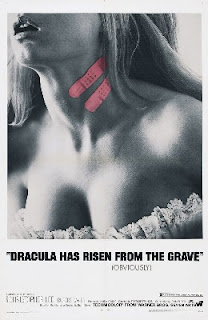
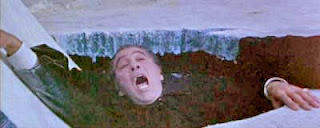
I like how they say 'Obviously!' but if you watch the movie you find that Dracula has not risen from the grave, he's risen from the moat. Fucking stupid advertising copywriters.

Wednesday, June 23, 2010

Dracula: Prince of Darkness (1965)

We open with the final sequence of Dracula (1958), showing the spectacular demise of Count Dracula at the hands of Van Helsing. This sequence is enclosed in a smoky frame because the earlier movie was shot in a different aspect ratio - Dracula: Prince of Darkness was a rare Hammer movie to be shot in 'scope.

We then go to a funeral, where a young woman is being prepared to be staked through the heart before burial, over the impassioned protests of her mother. The proceedings are thrown into disarray when an imposing figure appears, bellowing for them to stop and firing a rifle into the air. This is Father Sandor, and he's furious that the body is being subjected to this indignity when everybody knows that Dracula has been destroyed for a good ten years and there is no evidence that the girl has been bitten by a vampire.

We then go to a tavern where two English couples are taking a holiday. It is quickly established that one of the couples (Alan and Helen - yeah I know) is very prim & proper while the other (Charles and Diana - yeah I know) is quite modern & forward. Father Sandor arrives and proceeds to warm his posterior (as he calls it) by the fire, hiking up his vestments at the back to allow full access to the heat while holding forth on this as one of the great pleasures of life. One couple of shocked, the other is charmed. Could their respective personalities be relevant to the movie that follows, do you think?

Against the advice of Sandor the couples decide to head to their next destination. He is particularly adamant that they should stay away from the castle, which does not even appear on the map. The coachman decides to throw them out of the coach before they reach their destination (along with their luggage), abandoning them within site of the castle. As we've already seen in Brides of Dracula, coachmen love nothing more than to abandon travellers in the worst possible spot.

While they are trying to figure out what to do next, a coach without a driver just happens to ride up to them. They mount the coach to drive it to the next town but - surprise - it takes them to the castle. The more staid of the couples (particualrly Helen, played by Hammer regular Barbara Shelley) think that the best response to this is to turn tail and run, but they end up going inside to find a table laid out for four guests. They then discover that their luggage has already been laid out in the bedrooms.

While they are pondering this, a pleasantly smiling, genially welcoming man arrives to greet them.


This is Klove, who informs them that although the master of the house is dead he had left instructions for hospitality to be granted to any weary traveller. Klove was surely Angus Scrimm's inspiration for his performance as The Tall Man in the Phantasm series.

This build-up has taken up almost the entire first half of the movie. This is in stark contrast to the 1958 Dracula, where writer Jimmy Sangster and director Terence Fisher (who are also behind this movie) brought us into the action at a tremendous pace.

Having pussyfooted around for long enough, the movie now makes its move. Klove lures Alan down into the cellar, knocks him out cold with the hilt of a knife, then strings him up by his ankles so that he hangs over what appears to be a sarcophagus.


Klove then brings out a small casket that you will probably guess contains Dracula's ashes, and sprinkles them into the sarcophagus. He then slits Alan's throat, and his blood gushes into the coffin where it revives the Count. You might notice that this ceremony bears some similarity to a number of old legends; Odin and Osiris come to mind. It's also a sort of inversion of the crucifixion of Jesus. I'll let you sort out the meaning of this symbolism for yourself.

So you can imagine the shock Helen receives when Klove takes her down to the cellar. Her husband hangs upside down and Dracula waits for her, and he says...

...well, he doesn't say anything. Dracula does not speak at all in this movie, supposedly because Christopher Lee thought that the dialogue he was given was so poor that he refused to say it.

He's still a sex god, though. Helen is soon in complete thrall to him, and later when he slices open his chest and pulls Diana down to drink his blood, the implications of oral sex are blatant.


It's hard to get a coherent reading on the sexual politics of Dracula: Prince of Darkness. Dracula still represents pure unbridled sexuality, and is still evil. However the characters who suffer the most (Alan and particularly Helen) are the most sexually repressed. Perhaps Charles and Diana fare better because they are more balanced. Helen's fate is particularly hideous, as she is held down, writhing and hissing, and staked by a roomful of men in a scene that suggests (perhaps unconsciously) a gang rape. This scene plays as quite uncomfortably misogynistic.

Helen about to meet her fate

The movie also introduces, quite late in the day, a character called Ludwig, a fly-eating inmate of an insane asylum who first seems harmless but who turns out to be in Dracula's thrall. This character is obviously inspired by Renfield.

The movie ends in slightly baffling fashion, as Dracula fights Alan on the thin ice of the castle moat. Diana and Sandor figure out that a vampire cannot cross running water and start shooting the ice, creating cracks that trap him. He then slides into the water - and drowns. What the...?

This doesn't seem right to me

Despite its slow start, Dracula: Prince of Darkness emerges as a fine sequel to Hammer's first Dracula. Andrew Kier as Father Sandor makes a fine substitute for Peter Cushing as Van Helsing. It's kind of a shame that Hammer didn't run two series in parallel, one with Dracula against various savants and one with Van Helsing against various villains, but I guess Cushing was already quite busy with their Frankenstein series.

The scene of Dracula's resurrection almost makes up for the relative lameness of his demise. The supporting cast is a little bland, except for the versatile Barbara Shelley as Helen, who is compelling whether playing prudish, terrified or wanton. Christopher Lee is still in fine form as Dracula, despite his late appearance and non-speaking role; he's always been a fine physical actor, and his hands are particularly expressive.

This was the final outing for Terence Fisher and Jimmy Sangster as director and writer, respectively, in this series, though both would continue to work for Hammer on other movies. The next movie in the series, Dracula Has Risen from the Grave (I guess that Dracula Has Risen from the Moat doesn't have the same ring), was written by Hammer bigwig Anthony Hinds under his John Elder pseudonym and directed by two-time Oscar-winning cinematographer Freddie Francis, who's probably best remembered now for shooting David Lynch's three least typical movies (The Elephant Man, Dune and The Straight Story).

More on that tomorrow!